What Florida water does to a dock
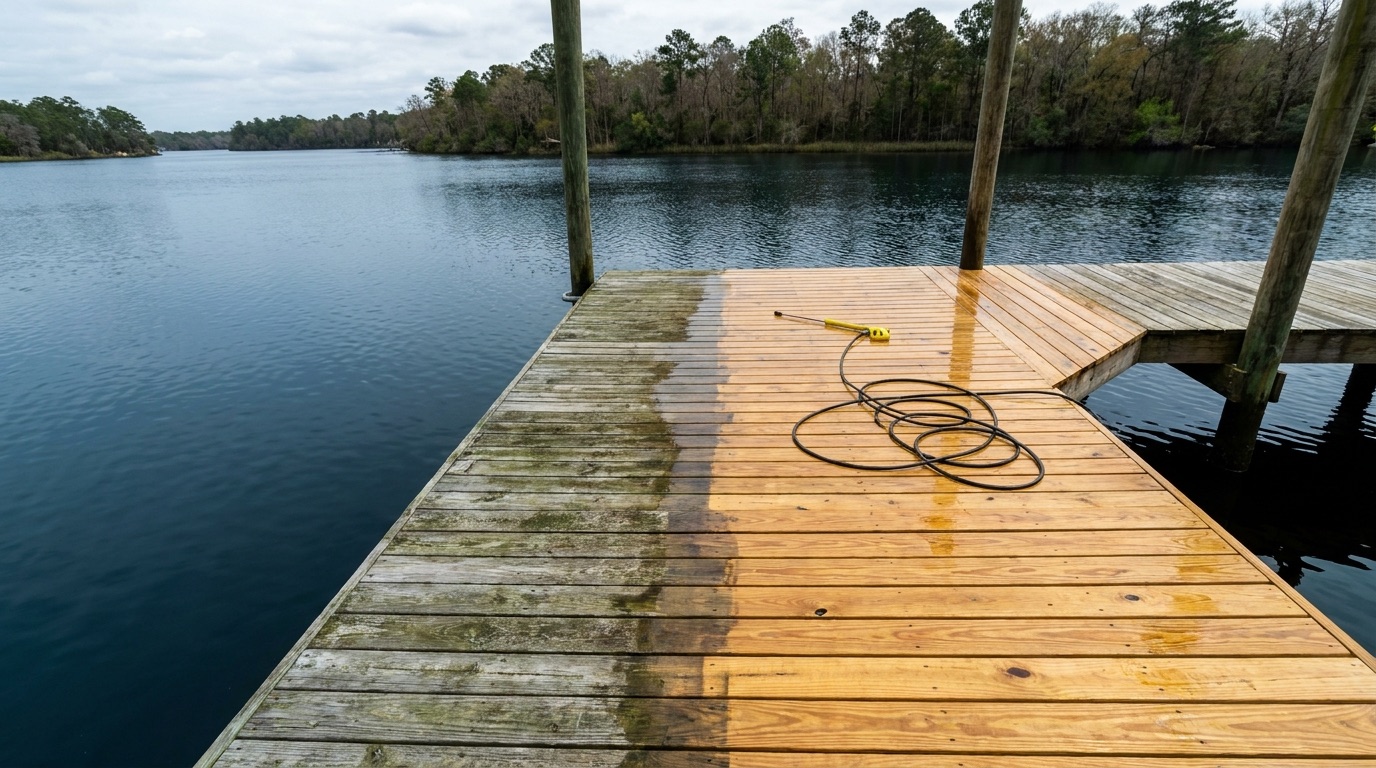
Every dock on the St. Johns, the Ortega, and the Intracoastal is fighting the same battle as the boats tied to it: constant moisture, brutal UV, and a climate where algae never takes a season off. The shaded boards go green and slick, the sunny ones fade to gray, and the splash zone around the ladder and cleats grows a film that's genuinely dangerous underfoot — a slip on wet, algae-coated wood is how dock injuries actually happen. Bird traffic, spilled bait, tannin stains off the river, and spider webbing under the rails finish the picture.
We were already at your dock detailing the boat, so cleaning the dock itself was the most natural thing our customers ever asked for. Now it's a full service: dock washing, algae and grime removal, and sealing, done with the same surface-appropriate care we bring to gelcoat.
Washing that matches the surface
The biggest mistake in dock cleaning is treating a 20-year-old deck board like a concrete driveway. High pressure on weathered wood furs up the grain, splinters the surface, and carves wand lines you can't undo. Our default on wood is a low-pressure soft wash: dock-safe cleaners kill the algae and mildew down in the grain, then a gentle rinse carries it away — the boards come out clean, not chewed up. Concrete pads, seawall caps, and composite decking can take more aggressive washing, and get it where it's safe. Rails, ladders, dock boxes, and cleats are cleaned along the way.
- Wood decking. Soft-washed to lift green algae, black mildew, and gray weathering without damaging the grain.
- Composite & PVC decking. Cleaned with composite-safe products that lift grime without scarring the surface.
- Concrete & seawall caps. Pressure-washed clean of algae, rust staining, and river grime.
- Rails, ladders & hardware. Wiped and washed so the whole structure looks cared for, not just the walking surface.
Sealing: the part that makes it last
A cleaning gets the dock back; sealing keeps it. Bare, cleaned wood in the Florida sun starts graying again in months and drinks up every afternoon storm. Once the boards have dried after washing, we apply a penetrating water-repellent sealer that slows UV graying, sheds water instead of absorbing it, and makes the next cleaning easier and further away. On most Northeast Florida docks the honest cadence is a wash about once a year and a re-seal every two to three years — we'll tell you which yours actually needs rather than selling you both every time.
Safety is the quiet reason to do this. The green film on shaded boards is as slick as ice when it's wet, and it's worst exactly where feet land — around ladders, at the gangway, and along the boarding edge. A clean dock isn't just curb appeal; it's footing you can trust with kids, coolers, and dock lines in your hands.
Where we clean docks
We clean and seal docks everywhere we detail boats, with regular routes through Mayport, Ortega, Mandarin, and Amelia Island — plus Julington Creek, Doctors Lake, the Beaches, and the rest of Duval, St. Johns, Clay, and Nassau counties. River docks on the St. Johns and Ortega fight tannin staining and shade algae; Intracoastal and Amelia docks add salt spray and barnacle scatter at the waterline. Same service either way, matched to what your dock is dealing with.
One honest boundary: we clean docks — we don't repair them. Piling work, board replacement, dock leveling, and boat lift service are marine construction, and that's not our trade. If we find soft boards or failing hardware while we're washing, we'll flag it so the right contractor can fix it.
Pair it with the boat
Most dock cleanings ride along with a boat job — a full detail or a maintenance wash on the boat while the cleaners dwell on the boards. One visit, and everything you see from the house is clean: hull, brightwork, and the dock it all sits on. Add bottom cleaning and the whole waterline package is handled.