Salt air on the Intracoastal
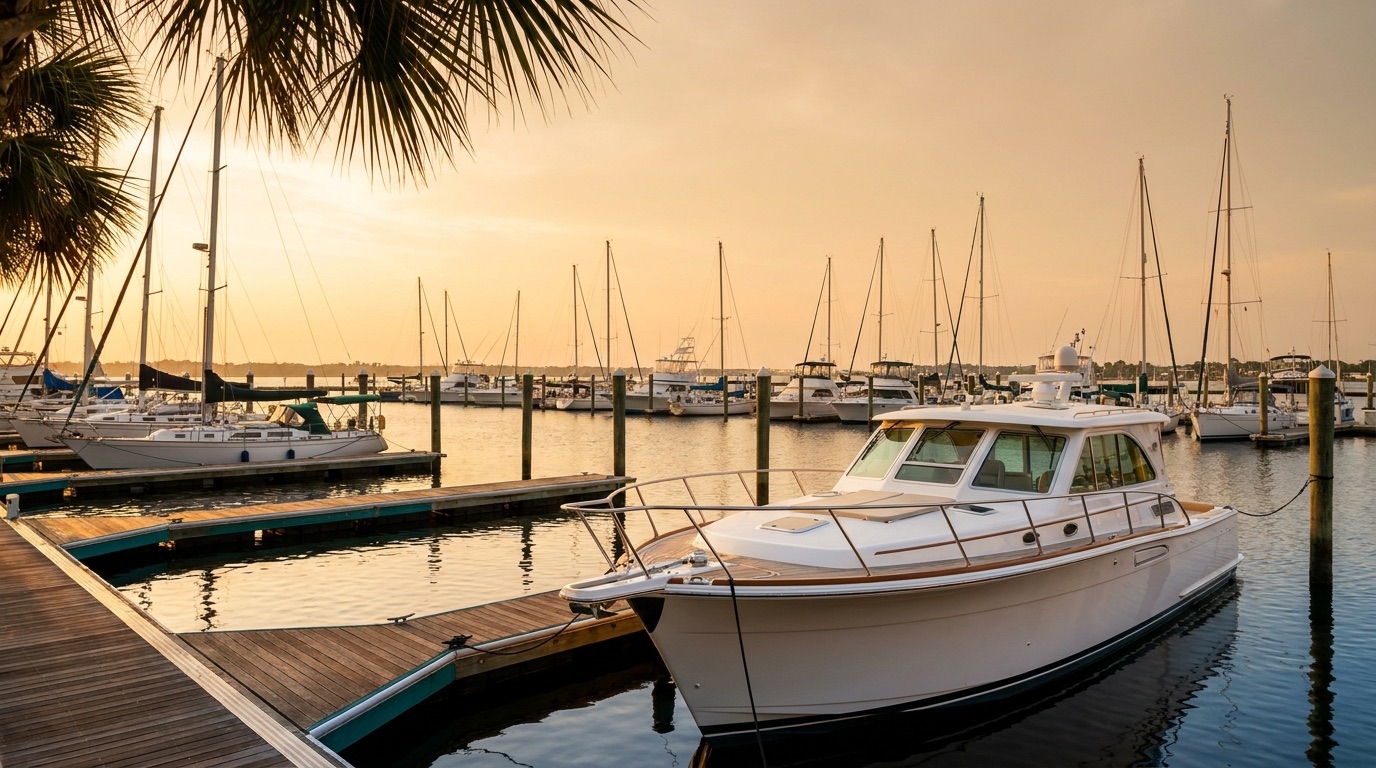
The Beaches take the full brunt of the Atlantic, and no stretch of Jacksonville boating sees heavier salt exposure. Whether your boat lives on the Intracoastal Waterway at Beach Marine, Palm Cove Marina, or Harbortown Marina, or on a coastal dock between Neptune and Atlantic Beach, it sits in constant salt-laden air under a hard coastal sun. The light out here is beautiful — palms, open water, and glare off the ICW — but that same combination is brutal on a hull.
Salt air is what makes detailing at the Beaches a different job than inland. Up the river at Ortega or Mandarin the water turns brackish and even near-fresh, where boats fight a soft scum line and slime more than anything hard. Out here it's full ocean salt pushed in through the St. Johns inlet and the Intracoastal, and that changes the work above and below the waterline. Airborne salt settles on gelcoat and metal every day, drawing moisture and accelerating oxidation, so gelcoat chalks and stainless and aluminum pit far faster here than they do inland. Below the boot stripe, that same ocean salinity drives a heavy barnacle set and hard growth that has to be scraped back, not just wiped off. We work Jacksonville Beach on a mobile basis, rolling right up to your slip, lift, or driveway with marine-specific products, water, and power so the boat gets protected where it's kept — before the salt has a chance to bake in.
Center-console country
The Beaches are center-console country. The boats kept here are offshore fishing rigs — center consoles that run out the inlet for kingfish, snapper, and grouper, then get tied back up or winched onto the trailer at the end of a long day. These are boats that get used hard and rinsed rarely: salt spray dries on the T-top, leaning post, and console, fish blood stains the non-skid, and the gelcoat takes a beating from sun and open-water spray on every run. A rig that fishes offshore most weekends and then sits in salt air the rest of the week bakes salt into the finish fast — which is why the center consoles out here need real protection and a rinse-and-wax rhythm far more than a boat kept on calm brackish water up the river.
What we do for Beaches boats
At the Beaches, protection against salt is the whole game. Most owners here start with a full detail to strip off the season's salt and oxidation, then lock it in with a marine ceramic coating so the next few years of sun and spray bead off instead of etching in. If your gelcoat has already gone chalky from the salt air, our oxidation removal brings back the gloss, and a recurring wash plan keeps salt from rebuilding between visits. We also handle interior detailing and mold removal and in-water hull & bottom cleaning.
Kept in the water year-round? The warm Intracoastal water grows fouling fast — ask about pairing a maintenance-wash schedule with periodic bottom cleaning so your Jacksonville Beach boat stays clean above and below the waterline.
Marinas we serve at the Beaches
We detail boats at all three of the Intracoastal's Beaches-area marinas: Beach Marine at the Beach Boulevard bridge, where most boats sit in wet slips right on the ICW; Palm Cove Marina, whose dry stack is one of the largest on the Intracoastal; and Harbortown Marina on Pablo Creek off Atlantic Boulevard. Beyond the marinas, plenty of Beaches boats live on residential Intracoastal docks and lifts behind the house, or on a trailer in the driveway between trips — and where the boat is kept changes the job. A dry-stack rig at Palm Cove we schedule so it's pulled and staged with the marina; a boat on a backyard ICW lift gets detailed right where it hangs; a wet-slip boat at Beach Marine gets done slip-side; and a trailer boat we knock out in the driveway. Wet slip, dry stack, lift, or trailer, we coordinate access so your boat is detailed and back in place without you making a trip.