Live oaks, shade, and everything that grows under them
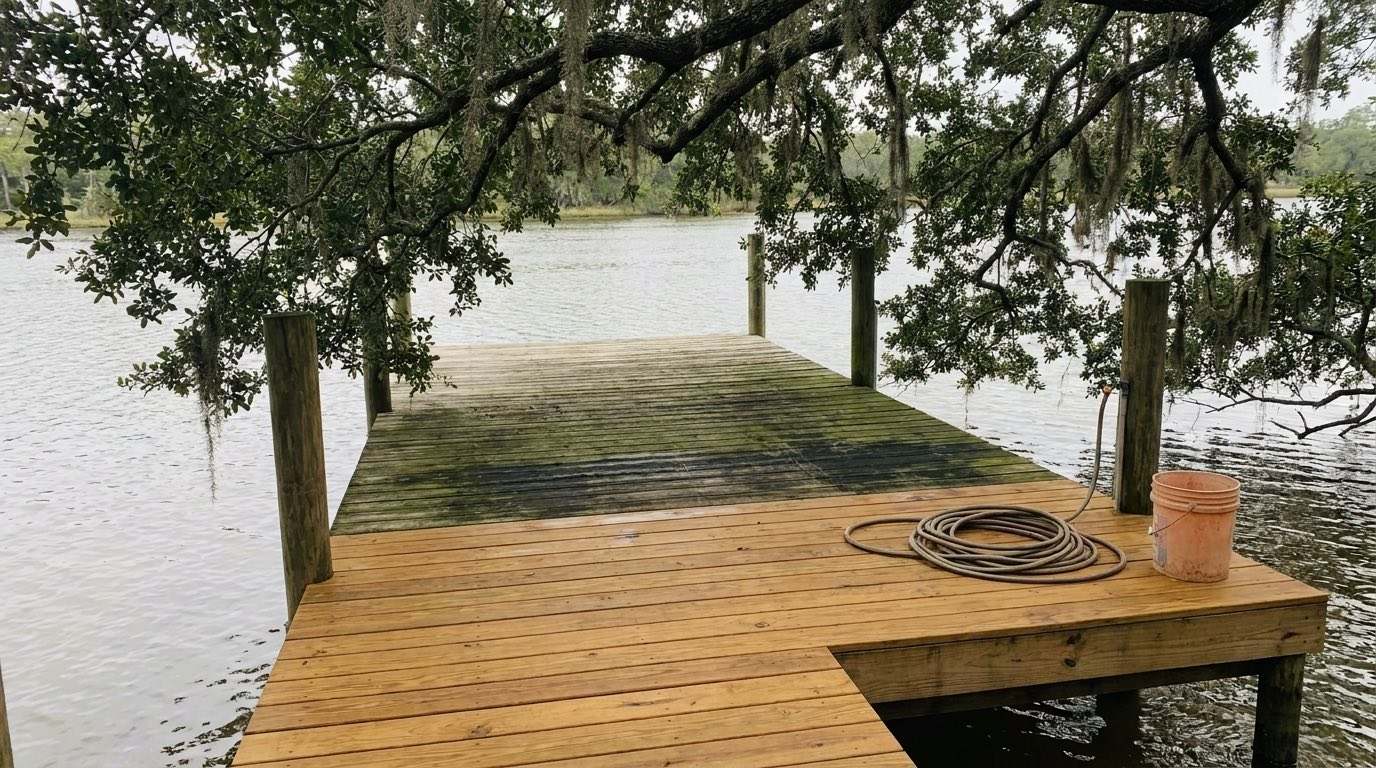
Ortega is one of Jacksonville's most boat-proud neighborhoods, and the thing that makes it beautiful is the same thing that makes its docks hard to keep clean: the live oaks. Moss-draped canopy leans out over the water along the Ortega River, shading the private docks that step down from backyard after backyard between Lakeshore and the Ortega River Bridge. Shade is what algae wants. Boards that never get a full day of direct sun stay damp, and damp wood in a subtropical climate goes green — first a faint film, then a slick, genuinely dangerous coating right where you step off onto the boat.
The water underneath adds the second layer. Ortega sits in the brackish, tidal middle stretch of the St. Johns, and that tidal rise and fall means the lower boards, the ladder, and the pilings get wetted and dried twice a day, every day. That splash zone is where you'll find the worst of it: black mildew in the grain, a tannin tint the river leaves behind, and the green film that turns a wet dock into a slip hazard. Meanwhile the sunny end of the same dock is doing the opposite — bleaching from honey-brown to that flat, dry gray that says the wood has lost its seal and is starting to drink.
Soft washing, because Ortega docks are older than most
Ortega is old-money boating, and a lot of its docks have been there a long time. That history matters when someone shows up with a pressure washer. The single biggest mistake in dock cleaning is treating a twenty-year-old deck board like a concrete driveway — high pressure on weathered wood furs up the grain, tears out the soft summerwood between the harder rings, and carves wand lines that never come out. On an Ortega dock, that's an expensive thing to get wrong.
So our default on wood is a low-pressure soft wash. Dock-safe cleaners go on and do the actual work, killing the algae and mildew down in the grain rather than blasting the top layer off, and then a gentle rinse carries it all away. The boards come out clean and evenly toned, not chewed up. Where the surface can genuinely take more — concrete seawall caps, the composite decking on newer Ortega docks, aluminum gangways — we adjust the approach to match. Rails, ladders, cleats, and dock boxes get cleaned along the way, because those are the parts your hands actually touch.
Already booking a detail? Most Ortega customers have us wash the dock in the same visit we detail the boat. We're already set up on your dock with water and power — adding the dock itself is the cheapest it will ever be.
Sealing: the part that makes it last
Washing an Ortega dock and walking away is a half-measure. Clean, bare wood in Northeast Florida starts absorbing moisture immediately, and under an oak canopy it will be showing green again within a season. Sealing is what buys you the time. Once the boards are clean and dry, a penetrating marine-grade sealer soaks into the grain, slows the water absorption that drives rot and cupping, and holds off the UV bleaching that turns wood gray on the sunny stretches.
On the shaded Ortega docks we usually recommend a wash once a year with sealer every two to three years, depending on how the boards are holding it. Docks with a genuinely open southern exposure take more UV and less algae, and often run the opposite schedule. We'll tell you honestly which one yours is after we've seen it — a dock that was sealed well two years ago frequently just needs the wash.
Where we clean docks in Ortega
Most of our Ortega dock work is private residential docks — the backyard docks and boathouses along the Ortega River and its side coves, where the dock is as much a part of the property as the house. We also clean finger piers and slips at The Marina at Ortega Landing, Sadler Point Marina, and Lamb's Yacht Center for owners who are responsible for their own slip, and we handle seawall caps and concrete along the river wall where algae and rust staining build up. If you're on the water anywhere between Lakeshore and the Ortega River Bridge, we cover it.