The harshest dock exposure in the 904
Mayport is Jacksonville's working waterfront — the spot where the St. Johns empties into the Atlantic past the jetties, where the shrimp boats and charter fleet tie up and the ferry runs back and forth beside Naval Station Mayport. Everything here points offshore, and everything here takes the full weight of ocean exposure. That includes the docks.
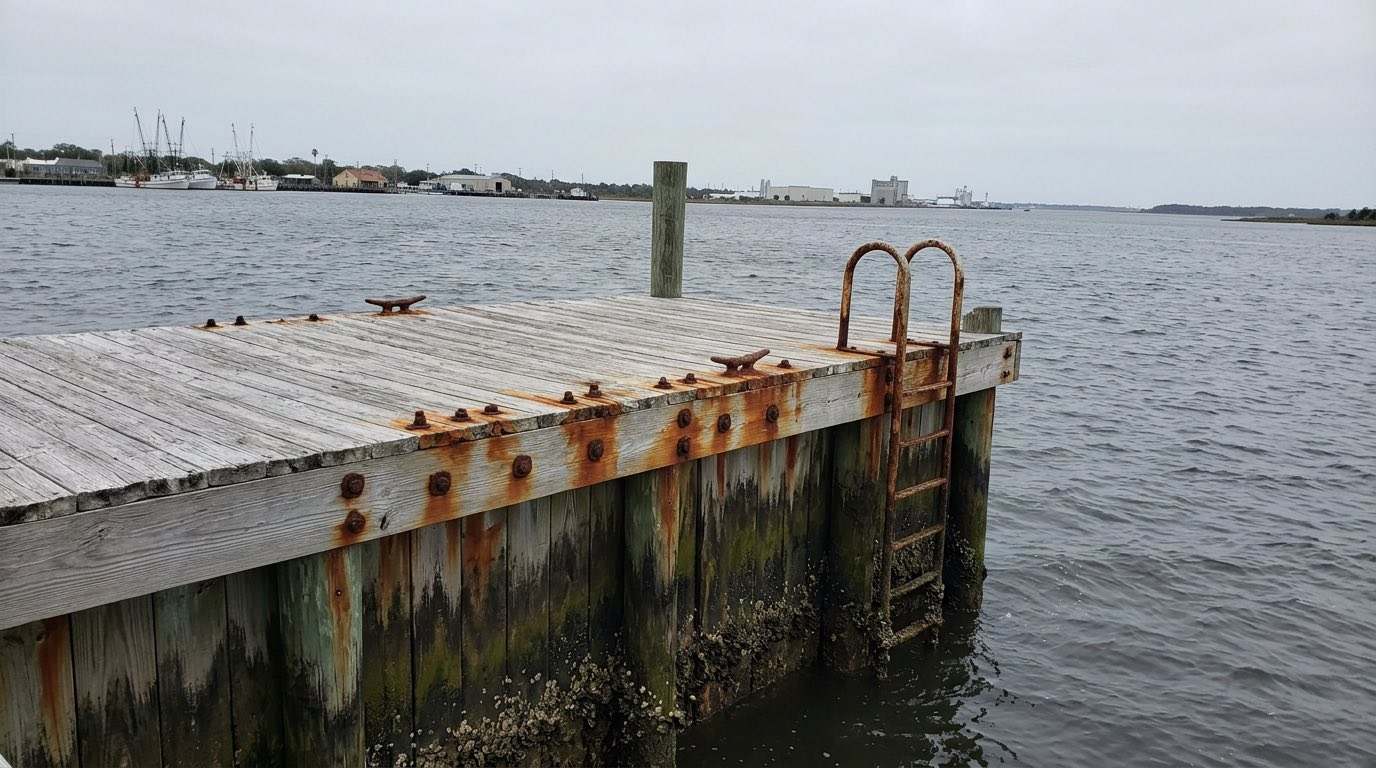
Three things make a Mayport dock a different job from a dock ten miles upriver. First, hard salt: spray comes off the jetties and the river mouth, dries on the wood, and leaves salt crystals working down into the grain. Second, unfiltered UV: there's essentially no tree canopy out here, so decking takes full sun from dawn to dark with nothing shading it. Third, tidal range: the rise and fall at the river mouth is significant, so the lower boards, ladders, and piling splash zone are cycling wet-and-dry twice a day in salt water.
Less algae, more salt, more rust
Here's what surprises people who moved out from the river neighborhoods: a Mayport dock generally has less green algae than one on Doctors Lake or up at Green Cove Springs. Salt is a growth inhibitor, so you don't get the heavy, year-round green film that coats near-fresh-water docks. What you get instead is a different problem list entirely.
Salt crust and grain damage. Salt drying in the wood opens the grain up and accelerates the UV breakdown of the surface, which is why boards here go from honey to flat, dry gray in a fraction of the time they would upriver.
Corrosion staining. Mayport's salt air is brutal on hardware — fasteners, brackets, rails, cleats, and ladder hardware corrode fast, and the rust bleeds down into the surrounding wood or concrete as brown streaking. Cleaning that staining out and brightening the hardware that's still sound is a real part of the job here in a way it isn't on the freshwater docks.
Splash-zone mildew. The one place growth does take hold is the shaded, constantly wet lower section — under the deck, around the ladder, on the north face of pilings. That's the safety issue and it gets specific attention.
We schedule around the tide. The low boards, ladder, and piling splash zone at Mayport are only properly workable at certain stages of tide — so we plan the visit around it rather than cleaning what's easy to reach and leaving the rest.
Soft washing salt-weathered wood
Sun-and-salt-weathered boards are, if anything, more vulnerable to a pressure washer than the shaded, algae-covered kind. The surface is already broken down and the grain is already open — hit that with a high-pressure wand and you tear out soft fiber, fur the surface, and leave permanent wand tracks in wood that was salvageable.
So our default here stays a low-pressure soft wash: dock-safe cleaners flush the salt out of the grain, lift the corrosion staining, and kill the mildew in the splash zone, then a gentle rinse carries it all off. Thorough fresh-water rinsing matters more at Mayport than anywhere else we work — leaving cleaner residue and salt in the wood defeats the whole job. Concrete pads, seawall caps, and the aluminum gangways common on the working docks here take a more aggressive approach where it's safe.
Sealing against salt and sun
Sealing is arguably more valuable at Mayport than anywhere in the 904, because both of the main attackers — salt intrusion and UV — are slowed by the same thing. Once the boards are clean, salt-flushed, and properly dry, a penetrating marine-grade sealer soaks into the grain, slows the moisture-and-salt cycling that opens the wood up, and holds off the UV bleaching that turns it gray.
The trade-off is that Mayport burns through sealer faster than the sheltered river docks do. Where a shaded Ortega dock might comfortably go three years, an exposed Mayport dock frequently wants resealing closer to every two — sometimes sooner on the fully open sections. Most docks here want a wash annually. We'll give you a straight read on where yours sits after we've walked it.
Where we clean docks in Mayport
Our Mayport work covers private docks and bulkheads along the river and the creeks off it, slips, catwalks, and finger piers for owners responsible for their own space at Morningstar Marinas Mayport, and concrete and seawall caps where salt and rust staining collect. We also work the docks around the Beaches side and up the Intracoastal. If it's on salt water in the northeast corner of Duval, we cover it.