What salt actually does while you're not looking
Salt water dries; salt doesn't. Every drop that evaporates on your boat leaves crystals behind, and those crystals do three kinds of damage. On gelcoat, they're hygroscopic — they pull moisture from the air and keep a corrosive film active on the surface long after the boat looks dry, dulling the finish and accelerating oxidation. On metal, salt is the electrolyte that makes corrosion go: stainless pits, aluminum powders, and chrome blooms with rust freckles at every scratch and weld. On canvas and isinglass, crystals work like embedded grit, abrading the material every time it flexes and grinding micro-scratches into clear vinyl.
The point isn't fear — it's that all of this is slow and cumulative, which means a boring, consistent routine beats any amount of heroic restoration later.
The 15-minute post-trip routine
- Flush the engine. Every saltwater trip, no exceptions — muffs or the built-in flush port until the water runs clear, per your engine maker's minutes.
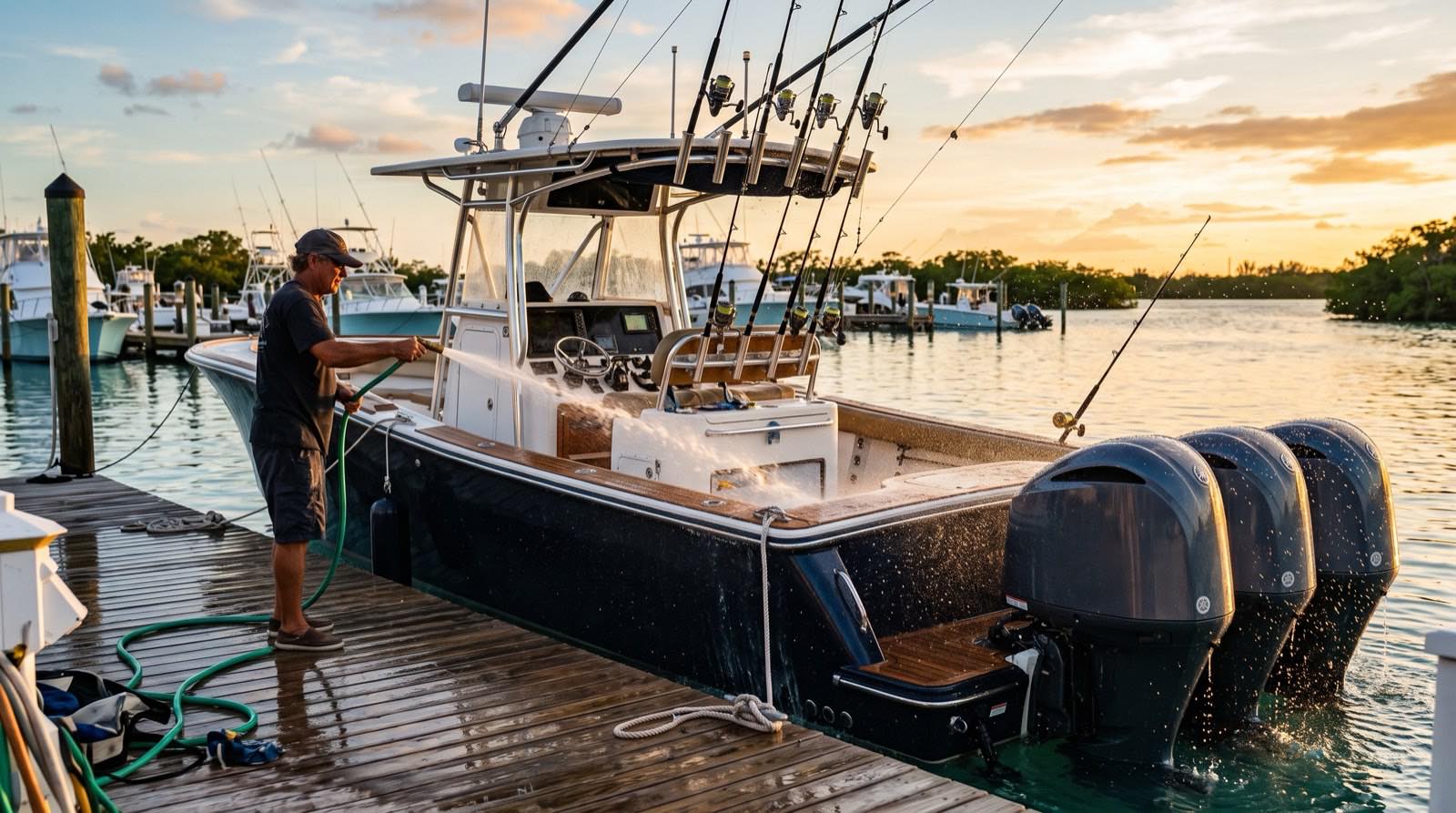
- Rinse top-down with fresh water. Hull, topsides, T-top, then deck. Low pressure and volume beats blasting — you're dissolving crystals, not power-washing them into seams.
- Hit the metal deliberately. Rails, cleats, hinges, latches, trim tabs, and the outboard bracket hold spray longest and corrode first.
- Rinse canvas and isinglass gently. Fresh water only on clear vinyl — and never wipe it dry while salt is still on it, or you're sanding it with a towel.
- Open and drain. Livewells, fish boxes, and compartments get a rinse; leave hatches cracked so everything dries with airflow instead of becoming a mildew box.
Fifteen minutes. It's the highest-return maintenance in boating.
Weekly, monthly, seasonally
Every week or two (for boats on the water): a real wash with marine soap — the rinse knocks crystals off, but only soap lifts the salt film and grime layer. This is the cadence our maintenance plans run on wet-slip boats. Monthly: polish or protect exposed metal (a protected rail sheds spray; bare stainless pits — our metal & teak service handles the restoration when it's past prevention), condition vinyl, and run the wax beading test from our waxing guide. Seasonally: re-protect the gelcoat, re-waterproof canvas, and check below the waterline — boats sitting in brackish water grow slime and barnacle colonies that hull cleaning keeps ahead of.
The Jacksonville twist: brackish is a double bill
The St. Johns and its creeks aren't fully salt — they're brackish, which sounds gentler and isn't. You get enough salinity to drive corrosion plus the tannin-stained, nutrient-rich water that grows algae and scum lines faster than clean seawater ever would. That's why Jacksonville river boats fight the brown waterline mustache so hard, and why offshore boats out of Mayport and river boats in Ortega need the same routine with different emphasis: offshore boats live and die by the post-trip rinse; river boats live and die by the regular waterline scrub. A center console that does both — a typical 904 boat — needs both.