
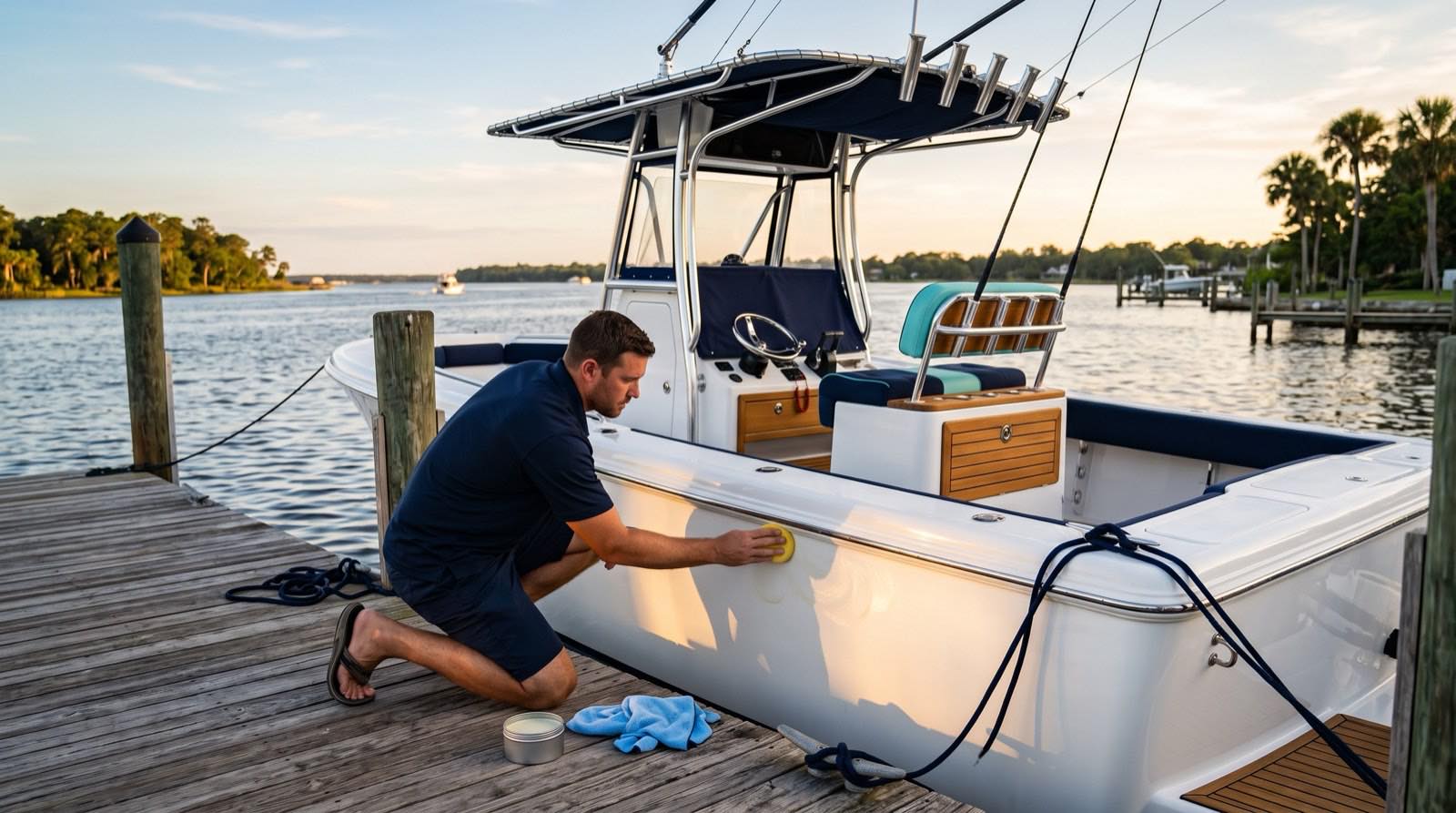
Why Florida eats wax faster than anywhere
Wax fails from UV exposure, heat, salt, and washing — and Northeast Florida maxes out all four. Our UV index lives at “very high” for half the year, summer deck temperatures cook the wax layer itself, salt and brackish water work at it chemically, and every wash (necessary as they are) takes a little protection with it. A carnauba coat that lasts six months on a lake boat in Michigan is genuinely gone in 8–12 weeks on the St. Johns.
The catch is that wax fails invisibly. The gloss fades so gradually you don't notice, and by the time the hull looks dull the gelcoat has already been taking raw UV for weeks. That's the on-ramp to oxidation — which costs ten times more to fix than the wax that would have prevented it.
The beading test: know instead of guess
Don't wax on a calendar you half-remember — test it. Splash water on a horizontal surface that gets full sun (the foredeck is perfect). Tight, tall beads that roll around: wax is alive. Lazy, flattening beads: it's on the way out; schedule a wax. Water sheets flat with no beading at all: the gelcoat is bare and has been for a while. Test monthly — it takes ten seconds at the dock.
Second check: after washing, run dry fingertips across the hull. Protected gelcoat feels slick; bare gelcoat has a faint squeaky drag. And if a white hull leaves any powder on your palm, you're past prevention and into correction.
Your real schedule depends on storage
- Wet slip, uncovered: wax every 2–3 months. Maximum sun, maximum salt, zero shelter — this is the hardest duty cycle in boating.
- Dry stack or lift: every 3–4 months. Out of the water helps the bottom, but the topsides still take full Florida sun.
- Trailer, outdoors: every 3–4 months, and a breathable cover buys you real time.
- Garage or covered storage: twice a year genuinely works — the national advice finally applies, because you've removed the UV.
- Dark hulls, any storage: shift one tier more frequent. Navy and black gelcoat runs hotter and shows UV damage first.
Wax vs. sealant vs. ceramic
“Wax” is really three options with different lifespans. Carnauba wax gives the classic warm gloss and lasts 2–3 months here. Polymer sealants are synthetic, bond harder, and go 4–6 months — for most Florida boats they're the better default, and they're what we use on maintenance plans unless a client asks otherwise. A marine ceramic coating replaces the whole cycle for years at a time; if you're waxing four times a year at $500 a visit, the math gets interesting fast.
Whichever you choose, the schedule only works if it happens. That's the honest pitch for a recurring plan: the boat gets tested, washed, and re-protected on a cadence — about $17–$25 per foot per visit — and the wax never silently expires with the hull paying the difference.