Cloudy isinglass isn't ruined — it's usually just neglected
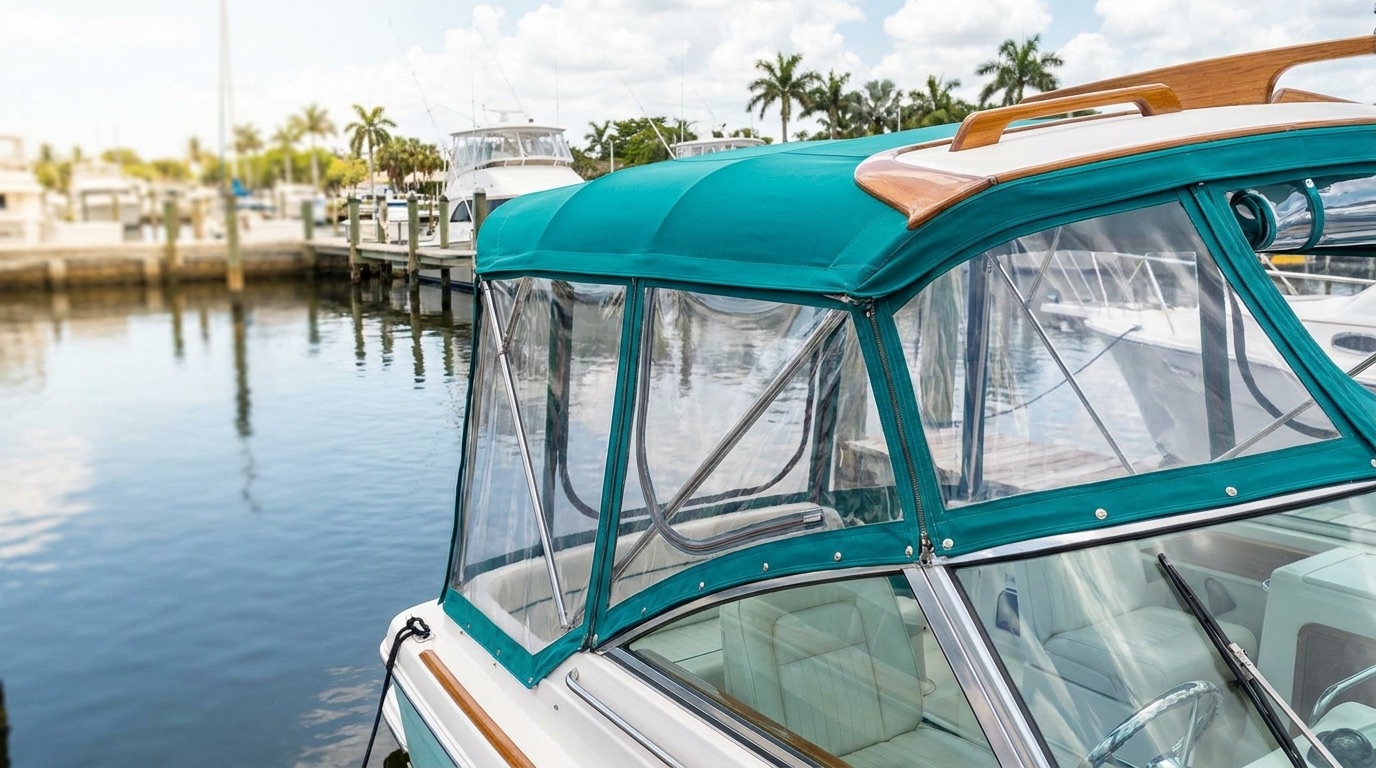
Isinglass — the clear flexible vinyl in your enclosure windows — is what lets you run in the rain and still see where you're going. It's also delicate. In Northeast Florida's sun, salt, and humidity it hazes, spots, and picks up fine scratches fast, until you're squinting through a milky panel that costs hundreds to replace. The good news: most of that cloudiness is surface contamination and light scratching, not permanent damage. Cleaned and polished the right way, a hazy panel comes back remarkably clear.
The wrong way ruins it. Household glass cleaner, ammonia, and paper towels are the fastest way to destroy isinglass — ammonia dries out and yellows the vinyl, and paper towels put tiny scratches in it that scatter light and make it look worse. We clean isinglass only with products formulated for clear marine vinyl, using soft microfiber and plenty of clean water, then polish out the haze and light scratching with a dedicated vinyl polish. Finally we seal it with an anti-static UV protectant that keeps dust and water from sticking, so it stays clear far longer between cleanings. Deep crazing or yellowing that has gone all the way through the vinyl can't be reversed — and if a panel is genuinely past saving, we'll tell you straight rather than sell you polish it won't take.
Canvas that sheds rain again — and stops growing mildew
Your bimini top, enclosure panels, and cockpit canvas take the full brunt of Florida weather. Left dirty and damp, marine canvas does two things: it grows mildew — those black and pink specks that stain the weave and smell — and it loses its factory water repellency, so instead of beading rain it soaks it up, sags, and drips on everything below. Once the coating is gone, UV chews through the fibers and the canvas starts to fail years early.
We reset it. The canvas gets washed with a fabric-safe marine cleaner that lifts dirt, salt, and grime from deep in the weave, then the mildew is treated so it's killed rather than just hidden. Once the fabric is clean and fully dry, we can re-apply a fabric protectant that restores water beading and UV resistance — rain rolls off again, the canvas dries faster, and mildew has a much harder time taking hold. We work the zippers, snaps, and fasteners too, cleaning and lubricating them so the enclosure actually opens and closes without fighting you or tearing at the corners.
Clean canvas and clear windows are easier to keep than to rescue. Once we've reset your enclosure, folding it into a maintenance plan keeps mildew from ever getting a foothold again in the humidity — a regular wash and re-treat beats a full restoration every season.
Why Florida is so hard on canvas and isinglass
Heat, humidity, salt air, and relentless UV are the perfect storm for enclosures. Moisture that never fully dries feeds mildew in the canvas weave; UV bakes the water-repellent coating off the fabric and slowly clouds the vinyl windows; and salt spray leaves a film that etches and dulls isinglass if it's left to sit. That's why canvas and isinglass here need attention more often than they would up north — and why using the right products, not a bottle of blue glass cleaner from the garage, makes the difference between an enclosure that lasts a decade and one you're replacing in three years.
Canvas & isinglass on its own, or as part of a full detail
If your hull is fine but the enclosure has gotten cloudy and grimy, a focused canvas & isinglass service is exactly what you need. If the whole boat is due, our full boat detail handles the canvas and windows alongside the exterior and interior work so everything gets done in one visit. We're fully mobile — center consoles, cruisers with full enclosures, pontoons with biminis — and we clean it all where the boat is kept, in the water or on the trailer, across Duval, Clay, St. Johns, and Nassau. Tell us what your enclosure looks like and we'll quote it honestly.