
What's growing down there, and how fast
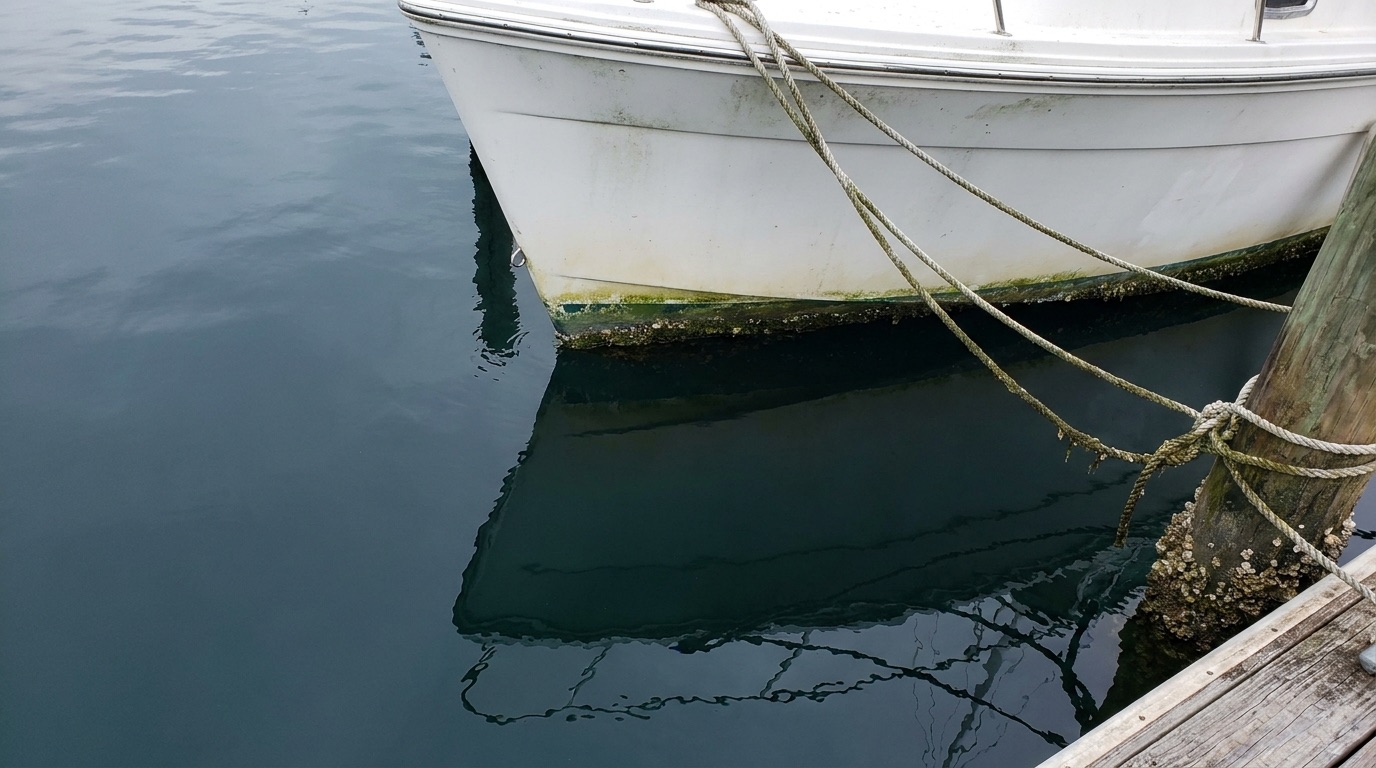
The moment a hull sits in Northeast Florida water, a biofilm starts forming — a slick microbial layer you'd feel as slime by week two or three. Soft green algae follows, and if the bottom goes a couple of months untouched in summer, hard growth like barnacles gets its anchor down. Each stage is dramatically harder to remove than the one before it: slime wipes off, algae scrubs off, barnacles have to be scraped — taking bottom paint with them.
Water temperature drives the clock. From roughly March through October, the St. Johns, the Intracoastal, and the creeks run warm enough that growth is aggressive, and an in-water boat genuinely needs its bottom cleaned every 4–8 weeks. In the cooler stretch from November through February, growth slows and most boats can go 8–12 weeks. It never fully stops — this is Florida, not New England — which is why "I'll deal with it in spring" is how bottoms end up needing a scraper.
Where your boat sits on the 4-to-8-week range
- Brackish river water (St. Johns, Ortega, Julington Creek): heavy algae and slime, moderate barnacle pressure. Middle of the range — every 6–8 weeks for most boats.
- Salt water (Intracoastal, Mayport, Amelia, St. Augustine): barnacles are the enemy and they settle fast in summer. Front of the range — every 4–6 weeks.
- Fresh, tannic water (Doctors Lake, upriver creeks): less barnacle risk, but algae and scum-line staining build steadily. Every 6–8 weeks keeps it easy.
- Boats that run often: regular use at speed knocks back soft growth, buying you time at the long end of the range.
- Boats that sit: a slip queen fouls fastest of all — still water, warm marina basins, zero scrubbing from use.
What a fouled bottom actually costs
Drag is the tax. Even a healthy slime layer measurably increases fuel burn, and a shaggy bottom can cost several knots off the top end while the engine works harder to hold cruise. Owners usually notice it as "the boat feels sluggish" or "I'm suddenly burning more gas" — both of which show up well before the growth is visible from the dock. Regular cleaning is one of the few boat expenses that pays part of its own bill back at the fuel pump, at $2–$4 per foot per cleaning.
The schedule is what keeps cleaning safe for your bottom paint. Light growth comes off with soft pads that healthy antifouling shrugs off. Let barnacles establish and the removal itself starts eating paint — which shortens the life of the whole bottom job. Frequent and gentle beats rare and brutal, every time.
When cleaning isn't the answer anymore
If the paint is flaking, wearing through, or growth comes roaring back within a couple of weeks of every cleaning, the antifouling is done — and no cleaning schedule fixes spent paint. That's a haul-out and repaint conversation with a boatyard. We don't do bottom painting, and we'll tell you straight when your bottom has reached that point rather than selling you scrubs that tear up dying paint. The full picture is on our hull & bottom cleaning page.
Boats on lifts and trailers mostly opt out of this problem — no immersion, no barnacles. They still collect a waterline scum band and algae staining from their hours in the water, which a regular wash-and-wax schedule handles along with the topsides.