The region's heaviest oxidation market
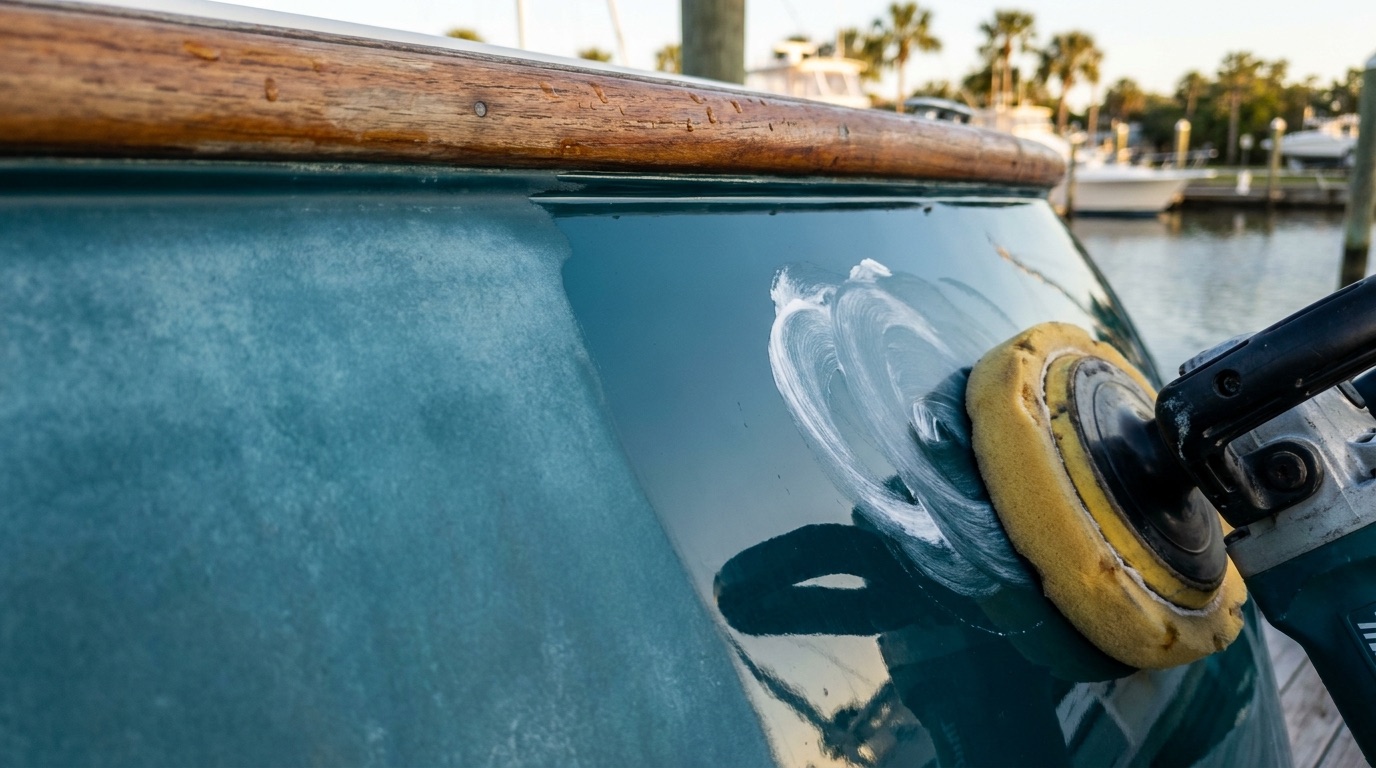
If you want to see what a Florida sun does to unprotected gelcoat, come to Green Cove Springs. This is a storage town: boats come off the water and sit — for a season, a year, sometimes several — and the whole time they're chalking. Sun is the oxidation story here, not salt. A hull that spends its life baking in a dry yard loses its shine far faster than one that's run and rinsed every weekend, and that's exactly the fleet we're brought in to rescue. The chalkier a boat gets, the more dramatic the turnaround, and this yard produces the biggest before-and-afters in the region.
The water itself is almost the opposite of the problem. Green Cove sits on the near-fresh, tannic upper St. Johns — dark, stained water that leaves a brown tannin ring at the waterline and grows slime and algae rather than the hard barnacle set you'd fight at the coast. That staining is real, and we clean it, but it's the secondary issue. The primary damage on a Green Cove boat is oxidation from months and years of standing sun, and that's the work this page is about.
We work Green Cove on a mobile basis, so your boat gets restored right where it's kept — on the hard in a storage yard, in a wet slip, or on a trailer in the driveway. We roll up with marine compounds, polishers, water, and power, and hand it back looking wet again.
The boats we cut back here
Green Cove's fleet is a storage fleet, and most of it has sat long enough for the gelcoat to go chalky: laid-up cruisers and trawlers waiting on the next season, sailboats parked between legs, project boats mid-restoration, and seldom-run center consoles that only move a few times a year. These aren't hard-used weekend boats — they're boats that have been standing still under the sun, which is precisely why the oxidation runs so deep. On a badly chalked hull we go multi-stage: a heavier compound to cut through the dead layer, then a polish to bring the gloss up, then a seal to protect it. If you've been staring at a faded, milky hull and assuming it needs paint, it almost certainly doesn't — here's how oxidation removal actually works on gelcoat.
Boat going to keep sitting? Restoring the gelcoat is step one — sealing or coating it is step two. Ask about pairing an oxidation cut with a marine ceramic coating so the finish holds through the next few years of storage-yard sun instead of chalking right back.
Best done while she's on the hard at Reynolds Park
The single best window for a heavy oxidation restoration is when the boat is blocked up on the hard in the dry-storage yard at Reynolds Park Yacht Center. Up on stands, the entire hull is accessible — topsides, hull sides, and the areas that normally sit below a waterline are all in reach, with no dock in the way and no tide to work around. We can cut and seal the whole boat in one visit instead of chasing sections. We also restore boats in Reynolds Park's long-term wet slips and boats sitting on trailers, but if yours is already hauled and up on the hard, that's the ideal time to book the cut. This page is about oxidation, but Green Cove is one of our core service areas — see everything we do around boat detailing in Green Cove Springs.